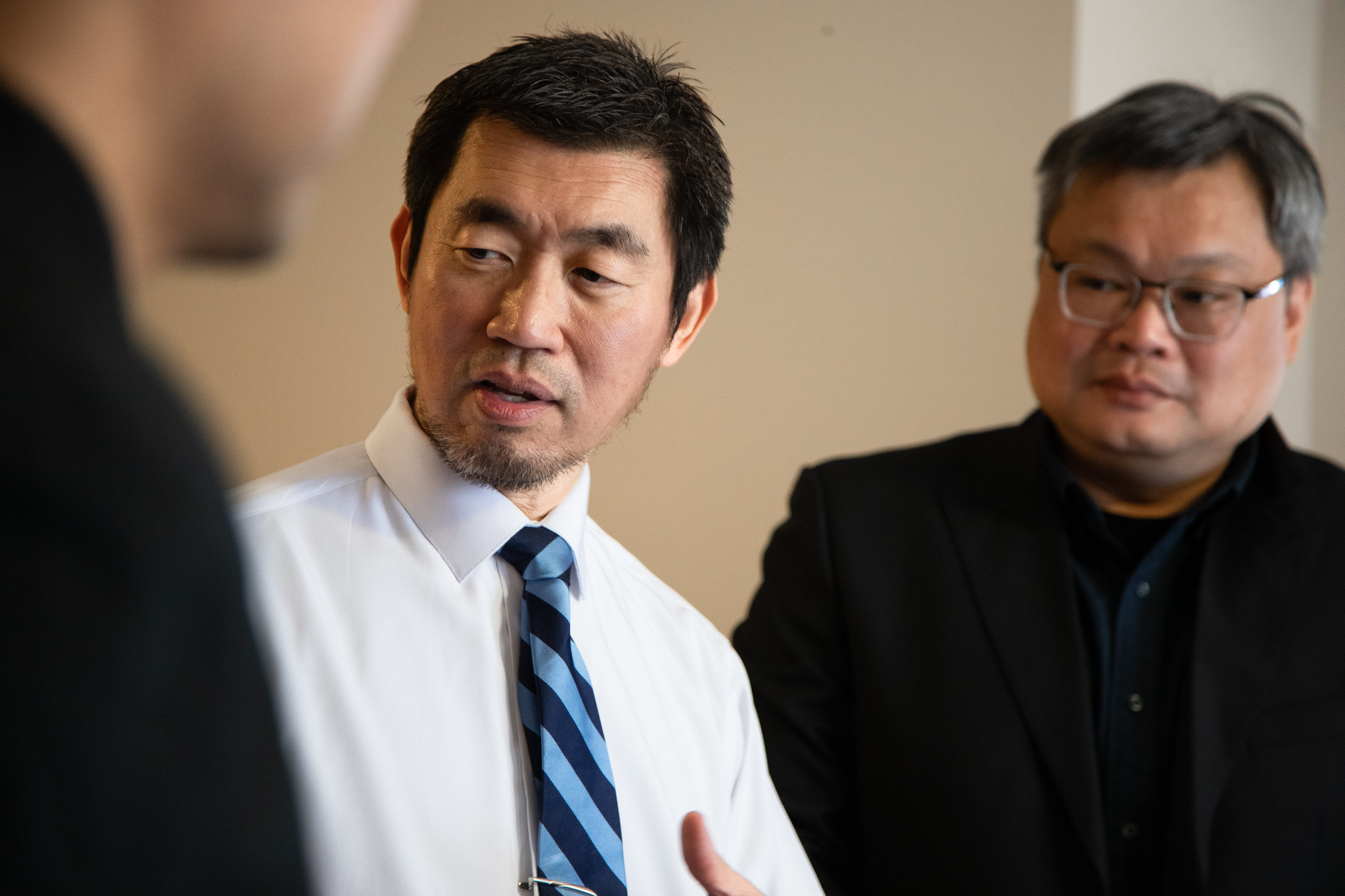
Forensic science students often begin their studies by mastering terminology, techniques and foundational principles. In a newly released textbook edited by world-renowned forensic scientist Dr. Henry C. Lee, PennWest University criminal justice professor Dr. Raymond Hsieh is helping students take the next step — applying those fundamentals to real-world investigations.
Cases in Forensic Science: What We Have Learned, edited by Lee and Elaine Pagliaro and published in January 2026, invites readers to join leading forensic experts as they walk through the logic, science and investigative decision-making behind well-known criminal cases. Each chapter focuses on a specific forensic discipline, guiding readers through evidence documentation, preservation, analysis and crime reconstruction.
Hsieh authored Chapter 13, “Digital Evidence and Computer Forensics,” which examines the role of digital evidence in modern investigations through the case People of Colorado v. Christopher Lee Watts. The chapter demonstrates how electronic data can help reconstruct events and support investigative conclusions, even in cases that do not initially appear technology-driven.
“Students need more than definitions and procedures — they need to understand how forensic science actually works in real cases,” Hsieh said. “This book challenges them to think critically about evidence, decisions and outcomes.”
Hsieh brings extensive expertise to the chapter. He holds a bachelor’s degree in forensic science, a master’s degree in information technology and a doctorate in information communication technology, and his research focuses on digital forensics, forensic multimedia analysis, big data and the use of artificial intelligence in forensic science and criminal justice.
The new textbook builds on a long-standing professional relationship with Lee. The two previously co-authored Introduction to Forensic Science & Criminalistics, published in 2019, which was designed to ensure students developed a strong foundation in forensic principles before moving into applied analysis.
“Our first book focused on giving students a strong foundation,” Hsieh said. “This one takes the next step by asking students to analyze real cases and apply what they’ve learned in a much deeper way.”