Tyler Zuck
Turning a Lifelong Love of the Outdoors into Research
Tyler Zuck’s PennWest experience has helped him transform a childhood connection to
wildlife into hands-on research and a future focused on conservation.
Tyler Zuck
Turning a Lifelong Love of the Outdoors into Research
Tyler Zuck’s PennWest experience has helped him transform a childhood connection to wildlife into hands-on research and a future focused on conservation.
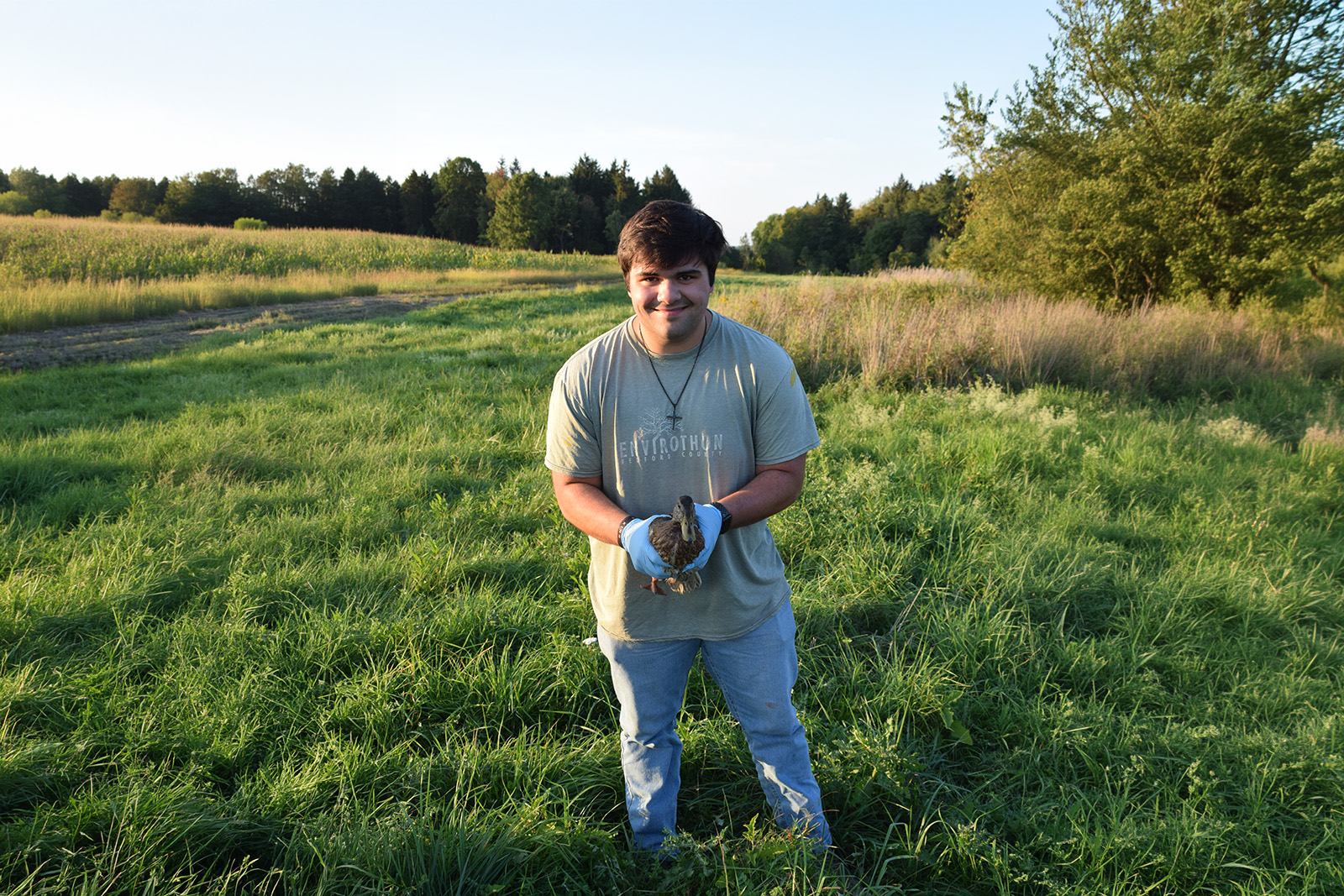
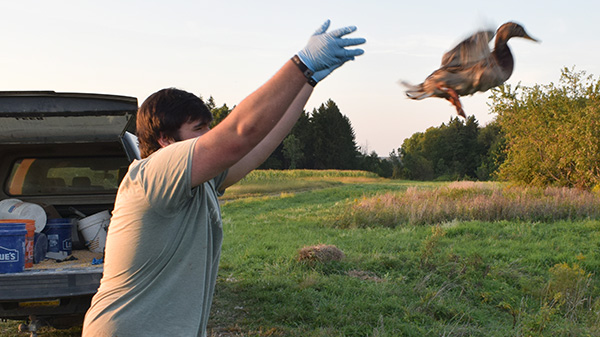
"High deer populations can lead to decreased biodiversity, poor forest regeneration, and disease transmission. And obviously, there's the side of why humans should care about this—we don't want our cars to strike a deer. So I'm doing research using a thermal imaging camera to estimate localized deer population abundances at Mingo Creek."
The outdoors was never just scenery for Tyler Zuck. It was part of daily life.
Growing up in Pennsylvania with a father who worked as a state game warden, Tyler was surrounded by wildlife from an early age.
“I’ve been exposed to the outdoors all my life,” he said.
He saw animals in the field, heard stories from the job, and even joined on bird surveys and job-shadowing experiences. Over time, what started as enjoyment became direction.
“It started as something I enjoyed,” Tyler said, “but then it turned into something where I knew I wanted to pursue this field so I could help conserve the natural resources and the beauty that the outdoors has to offer for present and future generations.”
At PennWest California, Tyler is pursuing a Bachelor of Science in Fisheries and Wildlife Biology and turning that lifelong interest into meaningful work. He is also involved with STAND, the campus ministry, which adds to the sense of community and purpose that shapes his experience on campus. His experience reflects the kind of applied learning that helps students connect what they love with what they can do professionally. One of the clearest examples is his research project at Mingo Creek in Washington County, where he uses thermal imaging to estimate localized deer population abundance.
The project is rooted in a real conservation question. High deer populations can affect biodiversity, forest regeneration and disease transmission, while also creating concerns for people. To study the issue, Tyler and his team go out at night with a thermal imaging camera, scanning the landscape, recording conditions and collecting data that would be difficult to capture through more traditional methods.
“We use a thermal imaging camera, because traditional methods, like spotlights or even observing during the day, can be really difficult,” Tyler said. It is hands-on, field-based research that puts science in motion.
Just as important, the opportunity grew through faculty support.
“I knew I wanted to do some research, but I didn’t know exactly what to do,” Tyler said.
The project came into focus through a class conversation with a professor about deer and thermal imaging. That moment helped turn a general interest into a specific path. It also confirmed that PennWest was a place where classroom learning could lead directly into practical experience.
After graduation, Tyler hopes to attend graduate school and continue studying applied ecology and conservation biology. [TC1]
“I would love to become a wildlife biologist,” Tyler said, “working with different agencies and the public to create habitat so we have these species and wildlife to enjoy now, and for the future.”
If he gets the chance to focus on a favorite, he knows exactly what it would be.
“I love birds. I’d call myself a big bird nerd. I just love everything about birds,” he said.
At PennWest, Tyler has been able to pair passion with purpose in a setting where faculty guidance, research opportunities and the natural world all feel close at hand.
Listen to the full story on the Power of PennWest Podcast