Edinboro
PennWest psychology majors gain grad-level research experience at national conference
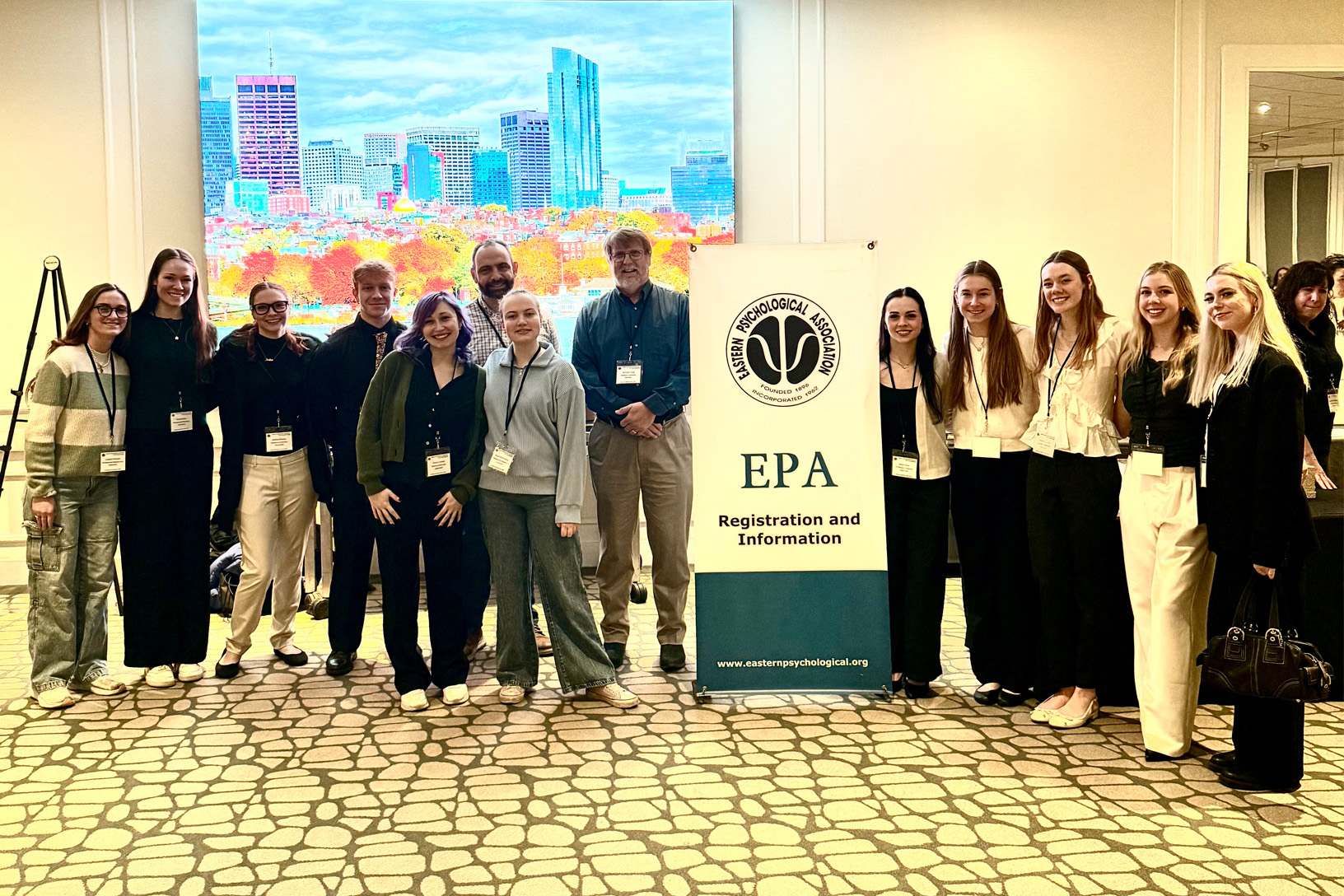
PennWest Edinboro psychology majors presented their research at the 2026 annual meeting of the Eastern Psychological Association this spring in Boston.
The students are enrolled in a research seminar that allows them to earn academic credit through original research projects developed in collaboration with faculty advisors. The course is a key part of the psychology curriculum and is designed to prepare students for graduate study and professional work in the field.
Faculty advisors for the seminar included Dr. Ron Craig, Dr. Peter McLaughlin, Dr. Sharon Hamilton and Dr. Wayne Hawley, all professors in the Department of Psychology, Counseling and Art Therapy. Craig said research experience is essential for students planning to pursue graduate degrees in psychology.
“Research activity is critical for students as they prepare for graduate programs,” he said. “Students who want to enter Ph.D. programs need meaningful research experience at the undergraduate level.”
Psychology majors at PennWest complete a foundational research methods course and often begin working in faculty research labs early in their undergraduate careers. By the time they reach their junior or senior year, students are prepared to design and carry out independent projects through the research seminar.
“Their first project is usually connected to research I already have underway,” Craig said. “By their senior year, they select a topic within my area of expertise, collect data and present their findings. Presenting at a conference gives them the opportunity to demonstrate their skills, receive feedback and connect with other students and professionals in the field.”
Through the research seminar, PennWest students gain practical experience that prepares them for graduate study and professional pathways in psychology, while contributing to ongoing research conversations in the field.
Fourteen students, supported by three faculty advisors, presented seven research projects at the conference:
Cannabigerol (CBG) Enhances Visual Attention in Rats
Amber McKay, Laney Burns, Lily Bement, Katarina Lords, Shali Slater; faculty advisor:
Peter McLaughlin
This study examined the effects of cannabigerol (CBG), a non-intoxicating cannabinoid,
on sustained and divided attention in female and male Long-Evans rats. Because CBG
acts as an alpha-2 adrenergic agonist, similar to some non-stimulant ADHD medications,
researchers explored its potential cognitive benefits. Results showed that CBG enhanced
divided attention without sedative effects, suggesting potential value for future
attention and ADHD research.
Dose-Dependent Effects of Degarelix on Sexual Incentive Motivation in Male Rats
Annmarie Pfiester, Autumn Burkett, Jodi Thomas, Cara Della Toffalo; faculty advisor:
Wayne Hawley
This study evaluated how varying doses of degarelix affect sexual incentive motivation.
Low doses produced short-term hormonal changes, while higher doses led to a delayed
reduction in sexual incentive motivation several weeks after treatment.
Effects of Kisspeptin and Testosterone on Copulatory Behaviors and Sexual Motivation
Jodi Thomas, Cara Della Toffalo; faculty advisor: Wayne Hawley
Researchers examined how kisspeptin and testosterone influence sexual behaviors and
motivation in male rats. Testosterone increased both copulatory behaviors and sexual
incentive motivation, while kisspeptin increased motivation only in rats not receiving
testosterone. Findings suggest kisspeptin may have clinical relevance for individuals
undergoing testosterone-deprivation therapies.
Kisspeptin or Testosterone Maintains Partner Preference in Sexually Naïve Male Rats
Jade Hudson, Samantha Schmidt, Jodi Thomas, Annmarie Pfiester, Autumn Burkett, Cara
Della Toffalo; faculty advisor: Wayne Hawley
This study explored whether kisspeptin or testosterone could maintain partner preference
and sexual motivation in sexually naïve male rats. Results indicated that either hormone
maintained partner preference, pointing to potential applications for treating hypoactive
sexual desire disorder.
Is Narcissism Increasing in Football? An Analysis of Touchdown Celebrations from 1980–2021
Benjamin Crow; faculty advisor: Wayne Hawley
Using content analysis of 200 randomly selected NFL games, this study examined changes
in touchdown celebrations over time. Findings showed that celebrations were more frequent
in recent decades, aligning with broader research suggesting increased narcissistic
behaviors in younger generations.
The Attractiveness of “Unsafe Sex” Increases the Probability of Discounting “Safe
Sex”
Karalyn Schwartz, Hannah Parillo; faculty advisors: Gregory Morrow and Wayne Hawley
Applying a behavioral economics framework, this study investigated how perceived attractiveness
influences willingness to engage in unprotected sex. Results showed that willingness
decreased as the likelihood of being perceived as attractive declined, with stronger
effects observed among men and with more attractive partners.
Misled on Zoom: Deception Still Slips By
Caitlyn Colburn, Olivia Croney, Emma Hiott, Audreyanna Mauk; faculty advisor: Ron
Craig
This study examined whether deception detection differs between virtual and in-person
interviews. Participants evaluated the truthfulness of statements delivered via video
conferencing. Results showed accuracy slightly above chance but no improvement over
in-person interactions, suggesting that virtual settings do not reduce common challenges
in detecting deception.