Dr. MarC Sanko
The American Experience as an Evolving Idea
A PennWest history professor reflects on family, memory, immigration and America’s
ongoing effort to become the nation it aspires to be.
Dr. MarC Sanko
The American Experience as an Evolving Idea
A PennWest history professor reflects on family, memory, immigration and America’s ongoing effort to become the nation it aspires to be.
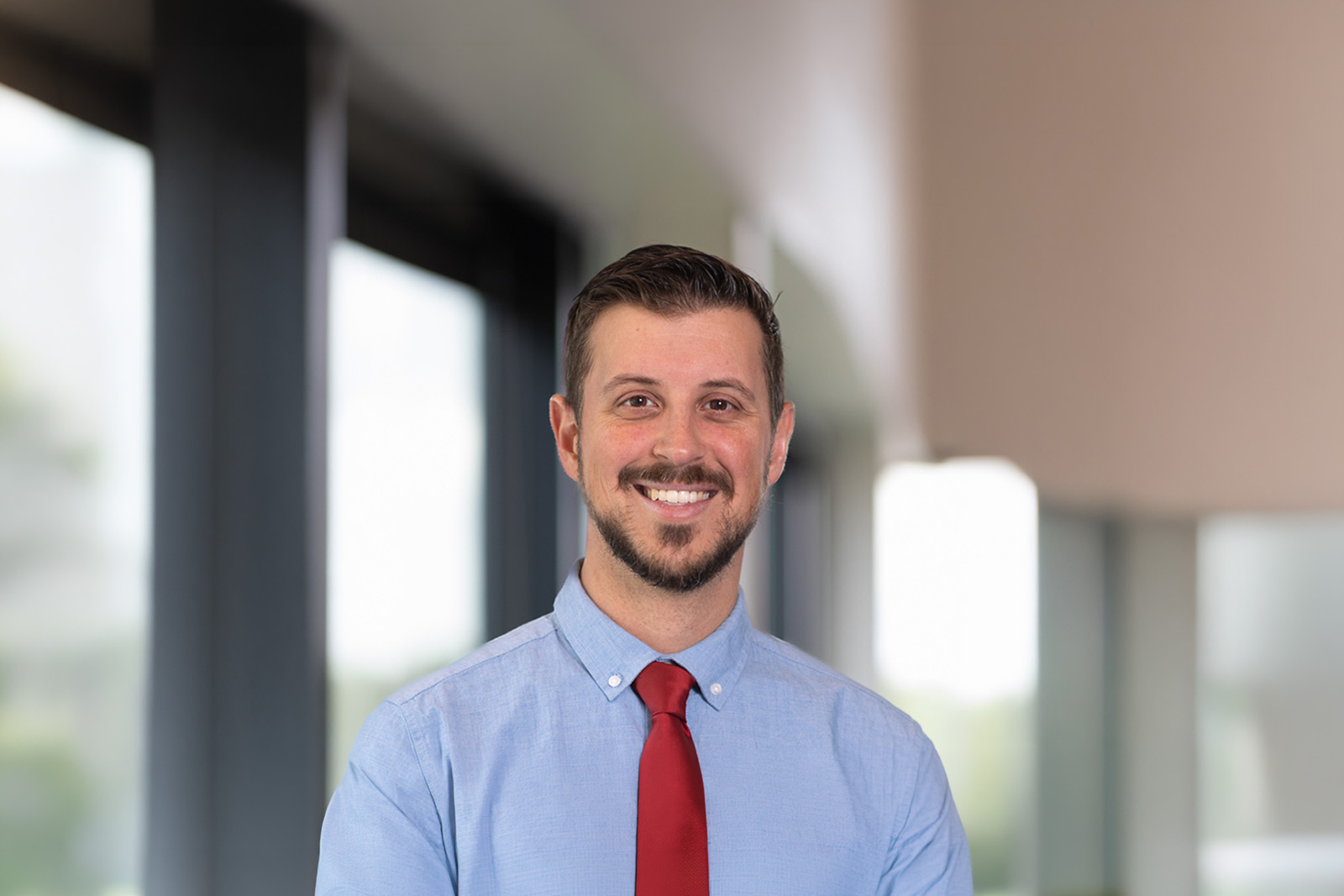
“The idea of America, whether the political structures that exist as America are there or not, the idea of America is still there.”
For Dr. Marc Sanko, history has always been personal.
Before he studied it professionally, taught it to students or built a career around understanding change over time, he heard it in family stories. He grew up in a Mediterranean family outside Detroit, listening to relatives talk about Malta, migration and a city that had changed dramatically within a single lifetime.
His grandparents came to the United States in the 1930s and spent their childhoods in Detroit. They remembered a city full of energy, shopping, tourism and opportunity. But as a child in the 1990s, Sanko saw a different Detroit.
“It made me wonder, what happened?” Sanko said. “How did we get to this point? Where did things change?”
Those questions became the foundation of his future.
Sanko, now an associate professor of history at PennWest, brings that same curiosity into his teaching. For him, history is not simply a record of what happened. It is a way of understanding how people, places and nations become what they are.
As the United States marks 250 years, Sanko sees the American experience as something deeply aspirational. It is not a finished achievement, but a continuing effort to move toward the ideals the nation has long claimed for itself.
“The United States is aspirational,” Sanko said. “And when you have that big, big target up top that says we're going to strive to be equal and great and wonderful, I mean, that's almost an impossible thing to do.”
But the striving matters.
“But if you're striving towards it, then that means everything's a challenge,” he said. “And sometimes and that's not a bad thing. Challenges can be good because you can grow from challenges.”
That is one of the lessons Sanko emphasizes when teaching American history. The country’s story, he said, includes flaws, contradictions and unfinished work. But it also includes an ideal that has continued to pull people forward.
“There were a lot of flaws in everybody,” he said. “There's a lot of flaws in every single human being. There's a lot of flaws in the founding fathers.”
Still, Sanko said, the founding ideal of equality has remained a kind of guidepost.
“But the one thing that they did right, that I think has given us a North Star to head towards constantly, no matter what's happening in this country, is that that opening preamble that we are all, equal, and that that this is a nation founded upon the ideal of equality,” he said. “Now, we've never ever gotten there. But we've always tried to go there.”
For Sanko, that effort helps explain many of the defining movements and conflicts in American history, including the Civil Rights Movement and broader struggles over who is included in the nation’s promise.
“We're always headed that direction,” he said. “And a lot of the biggest fights that we end up having in this country amongst ourselves are, like, how do we get to that point? How do we become what the founders wanted us to be?”
Immigration is part of that evolving story. Sanko points out that while the United States is often described as a nation of immigrants, its history includes repeated moments of resistance to new groups of people.
“There's also really hardly ever been a time where despite being a nation of immigrants, we've been very accepting of immigrants,” he said.
Across generations, he said, different groups have been treated as outsiders before becoming part of a broader American identity.
“There will always be problems,” Sanko said. “There will always be issues. My hope would be that people retain these aspirational things that we've been talking about.”
For Sanko, the American experience is not only about what the country has been. It is about the ideas people continue to carry forward, test, challenge and try to make real.
“I think they're good ideas,” he said. “They're ideas that organize society in a way that should be, in theory, equal.”