California, Clarion, Edinboro, Global Online
PennWest speech-language pathology students gain hands-on clinical experience during on-campus intensive
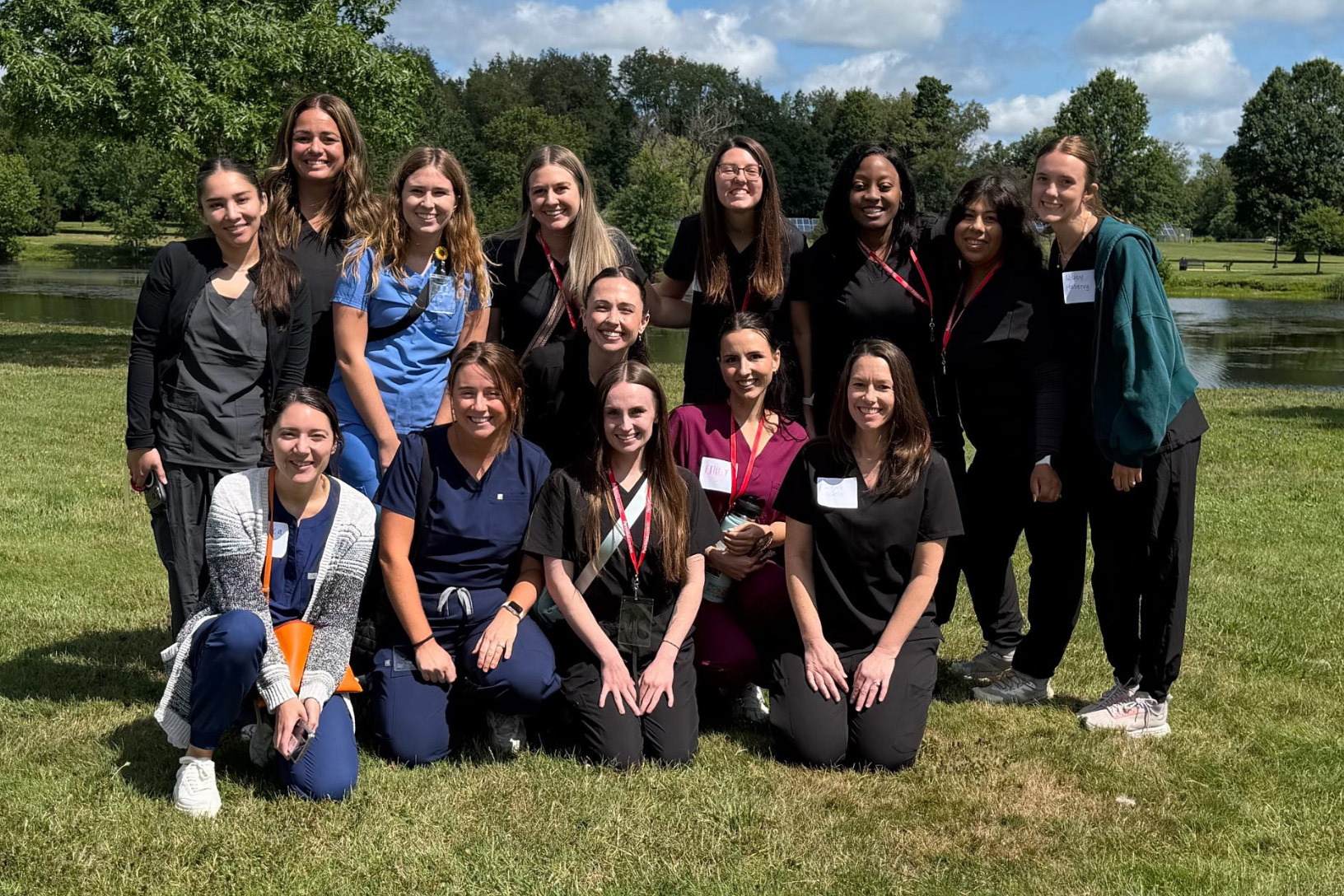
Students in PennWest University's online Master of Science in speech-language pathology program traded their computer screens for hands-on clinical experiences as they gathered on the Edinboro campus for a required clinical intensive Aug. 3-7.
The one-week intensive is a signature component of PennWest Global Online's fully online master's program, bringing students from across the country together to strengthen their clinical skills while working directly with clients, faculty and community partners. The California and Clarion campuses each hosted a clinical intensive earlier this summer. Collectively, the three campuses welcomed over 60 graduate students from around the country.
Inside the SLP Clinical Intensive
PennWest Global Online students bring their learning to life.
The immersive experience gave speech-language pathology students the opportunity to practice clinical skills, collaborate with classmates and faculty, and prepare for the hands-on work of becoming speech-language pathologists.
The clinical intensive gives students the opportunity to apply what they've learned in real-world settings, collaborate with classmates and build relationships with faculty.
“I think one of the things that really makes our program unique is that students are able to learn asynchronously but still have that really important in-person component for this one-week requirement,” said Dr. Mary Weidner, chairperson of PennWest's Department of Communication Sciences and Disorders. “This allows them to have the flexibility in their learning while also developing those critical hands-on clinical experiences, forming relationships and feeling like PennWest is home.”
PennWest's 60-credit Master of Science in speech-language pathology prepares graduates academically and clinically to meet certification requirements established by the American Speech-Language-Hearing Association. Students’ clinical education involves a blend of simulation, teletherapy, and two externships that provide diverse clinical experiences across the lifespan.
The on-campus intensive complements that curriculum by giving students opportunities to evaluate and treat clients while working alongside faculty and classmates.
“Our students are from all over the country, and we are really fortunate to offer this intensive experience as a supplement to our rigorous academic program so that when they go home, they have not only the knowledge and skills to be successful clinicians but also the confidence and the flexibility of clinical thinking,” Weidner said.
The experience also extends beyond campus through partnerships with regional organizations, exposing students to a variety of clinical settings and patient populations.
“One of the things we really value as part of our program is our community partnerships,” Weidner said. “We are very lucky to partner with various types of organizations such as schools, hospitals, outpatient centers, and skilled nursing facilities to formulate those relationships and give our students really great experiences."
During this week's intensive, students visited Edinboro Manor, a skilled nursing facility, and the Multicultural Resource Center in Erie, where they worked with members of the region's refugee and immigrant communities.
For Veronica Garcia-Hoepker, an MSSLP student from Norfolk, Virginia, the program's flexibility made it the right fit.
“I chose this program because I'm a person that moves around a lot,” she said. “So, this program was able to accommodate that kind of lifestyle.”
The clinical intensive has helped her build confidence in ways she hadn't expected.
“My biggest takeaway has been having to learn to think on my feet," Garcia-Hoepker said. “It's been a great experience just to kind of get in there and hit the ground running.”
Student Natalia Nunez, from Corry, Pennsylvania, said the program has challenged her while preparing her for a career in speech-language pathology.
“The program is very rigorous, but it has helped a lot with preparing me to be a good speech pathologist,” Nunez said. “I feel like I've learned a lot from when I started to now. I feel like a completely different person.”
She credits the program with giving her confidence in her future profession.
“That idea of being able to do more than I thought I could has been extremely helpful,” Nunez said. “I know that I'll be able to help people in the future.”
Weider said that helping students become competent and confident clinicians is one of the program's ultimate goals.
“We really hope that they take the skills and knowledge that they've gained – both here and through their coursework – but also the skills to think flexibly, to think critically, and to have the confidence to work with a diverse population,” she said.