Jake Haugh was a 9-year-old Pirates fan when he met Clint Hurdle, a kid from Edinboro, Pa., with a donation to deliver and little reason to imagine the manager would become a lasting presence in his life.
He had asked for contributions instead of birthday presents, choosing Wins for Kids because he loved the team. Clint and his wife, Karla, conducted the fundraising campaign with Pirates Charities and ROOT Sports, benefiting Pirates Charities and the Prader-Willi syndrome program at the Children’s Institute of Pittsburgh.
Hurdle heard about Haugh’s effort and invited him to meet.
The fundraiser began a conversation that continued for the next 11 years.
They exchanged texts and life updates. Their families visited. As Haugh moved through school and into college, Hurdle remained someone he could turn to for encouragement and perspective.
“He was a big part of me growing up,” Haugh said.
This November, Haugh helped bring his longtime mentor to PennWest California, where he is a senior and men’s soccer player preparing to graduate in May 2027. Hurdle’s Nov. 3-5 presentations at Edinboro, Clarion and California gave students an opportunity to hear lessons Haugh has come to understand through their friendship.
The program, “Play Your Heart Out,” explored leadership, adversity and giving back. For Haugh, who plans to earn a Bachelor of Science in Psychology and pursue graduate study to become a sports psychologist, those lessons are beginning to inform the work he hopes to do himself.
“For him to speak here is very nice because it’s kind of a full circle moment for me,” Haugh said. “I did a charity event with the hockey team when I was in fifth grade here.”
Now, he is preparing to graduate from the campus where he once arrived as a young fundraiser.
Learning to see a different future
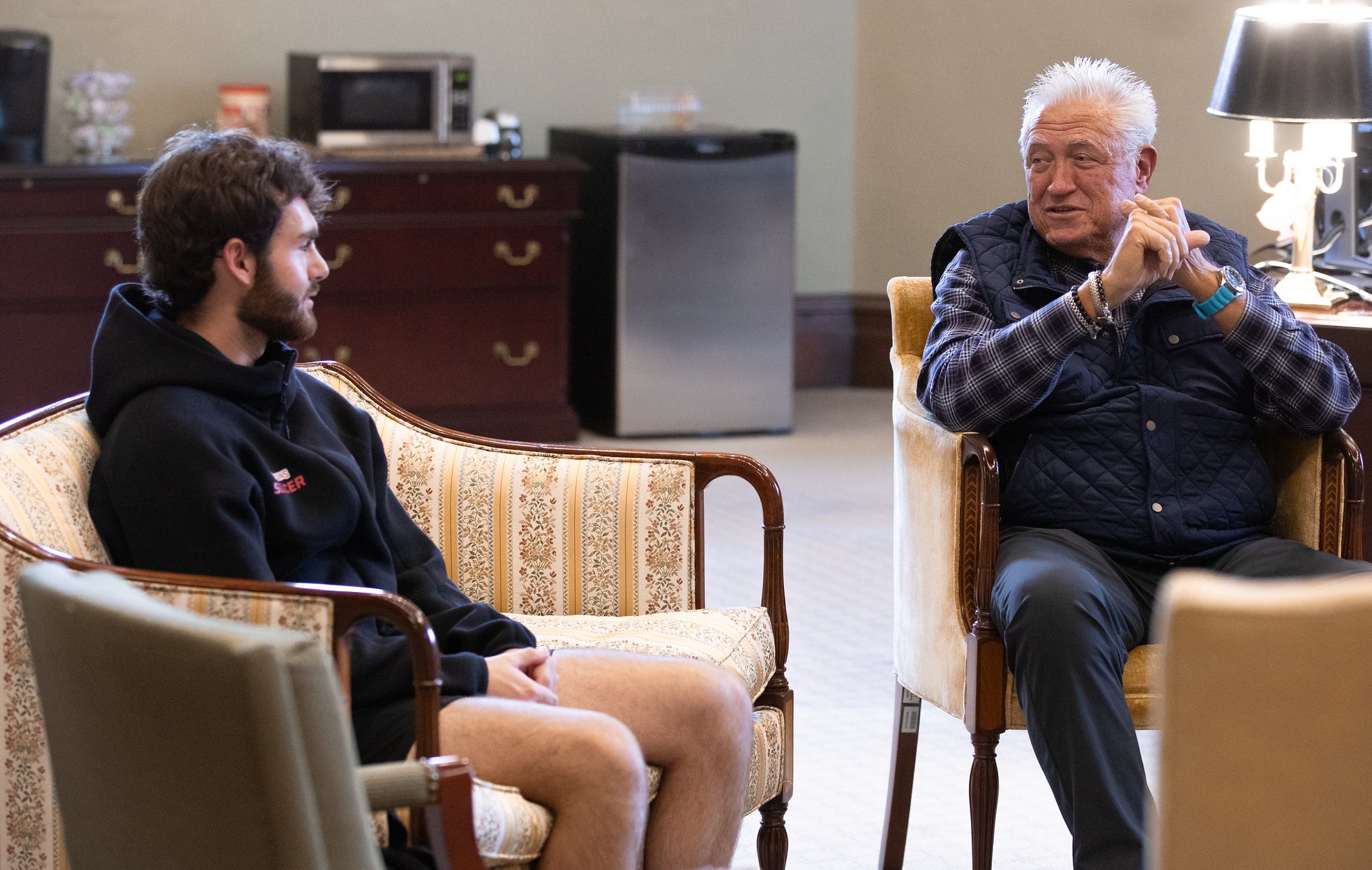
Before Hurdle’s California presentation, the two sat together and spoke about what happens when a life unfolds differently than expected.
For Hurdle, the expectations arrived on a magazine cover.
He was 20 when he walked into a convenience store and discovered that Sports Illustrated had named him “This Year’s Phenom.” He knew the magazine had photographed him. He had no idea he would be on its cover.
The attention left him feeling responsible for fulfilling a promise other people had made about his future. He recalled believing he could not fail and had to make everyone happy. When his playing career fell short of those predictions, he tried harder to satisfy expectations that seemed to grow heavier with every disappointment.
“I’ve got to do more. This is more important than that. And all of a sudden, it becomes a monumental thing you’re carrying around,” Hurdle said.
Understanding what to do with that experience took time. Later, as a coach and manager, he found himself sitting across from young players carrying similar burdens — a highly touted draft pick, perhaps, or someone trying to prove himself after a trade.
He knew something about the distance between the player everyone expected to see and the person trying to live up to it.
“Failure is not a person. It’s an event,” Hurdle said.
His disappointments had become part of what he could offer a struggling player. The experience that once weighed on him gave him a way to listen and understand.
“Initially, I got a little bitter, but then over time that didn’t work very well, so I found a way to get better,” he said.
Beside him, Haugh recognized a possibility in his own experience.
A torn hamstring followed by a torn ACL interrupted his college soccer career. The injuries brought frustration and time away from the game. They also gave him experience he hopes to draw on in his future work.
Haugh described the importance of “knowing that my injuries help me better relate to athletes that I’ll talk to.”
He has watched Hurdle turn hard experience into an ability to help others. As he looks toward a career in sports psychology, he is beginning to see how he might do the same.
The influence of someone who stays
Much of that learning has happened over years of conversation.
Haugh said Hurdle has encouraged him to be grateful, remain humble and consider what he can contribute to the people around him. Watching the manager support his players helped Haugh understand his own responsibilities as a teammate, including when injuries kept him from playing.
“Clint has shown me that leadership isn’t always about the position you hold — it’s about how you show up for other people and the impact you choose to make,” Haugh said.
Hurdle’s advice comes with an acknowledgment of how much help he has needed himself. He spoke about alcoholism, divorce and moving back in with his parents at 30. He credits their unconditional love and the support of others with helping him move forward.
“That’s not something you draw up in your highlight films,” Hurdle said. “That’s part of my journey.”
His willingness to discuss those experiences allows younger people to see the uncertainty and effort behind the accomplishments. It also gives him a way to talk with someone whose plans have gone awry without pretending the way forward is always clear.
For Haugh, that perspective has been available as his questions and circumstances have changed. The child raising money for a charity became a college athlete dealing with injuries, then a psychology student considering how to help others through their own setbacks.
Hurdle stayed interested through each stage.
Bringing the conversation to PennWest
One of the relationships formed through Haugh’s early fundraising eventually helped bring that conversation to all three PennWest campuses.
Jamison Roth, director of campus recreation at PennWest, first met Hurdle at a 2016 fundraiser involving California’s hockey team. Haugh was still in elementary school, and Roth remembers him signing autographs beside the major-league manager.
A decade later, Haugh was working in the campus fitness center when Roth raised the possibility of inviting Hurdle to speak. Haugh helped make the connection.
The visit became part of Campus Recreation’s ongoing workshop series, which offers students opportunities to explore topics ranging from careers to health. Roth sees particular value in speakers who can draw on their experiences to help students think through decisions, relationships and difficulties they may encounter.
“He’s just a normal person like everybody else, and he relates to them, but they listen because of his experiences,” Roth said.
For Hurdle, those conversations offer something in return.
“It’s very invigorating for me to get back in front of younger people,” he said.
The benefit can extend well beyond the audience. Roth described how a coach might bring a new perspective back to an entire team, helping players who never heard the original presentation. A student might recognize that a classmate needs encouragement and know how to offer it.
“We all have things that we can give other people,” Roth said.
After completing the three-campus visit, Hurdle shared a reflection on social media about what he had heard from students. Leaders, faculty and coaches, he wrote, need to answer three questions as soon as possible.
“Can I trust you? Do you care about me? Can you make me better!”
For the adults guiding young people, the questions ask for both care and follow-through. Students want to know whom they can count on and whether that person will help them grow.
In Haugh’s friendship with Hurdle, the answers have emerged through years of conversations, encouragement and continued involvement. By helping arrange the campus visit, Haugh gave fellow students access to someone whose guidance had mattered in his own life.
“Ground level is just people helping people,” Hurdle said.
A place in each other’s lives
Hurdle is considering his own next steps after leaving the Colorado Rockies organization Oct. 31. Speaking engagements have given him another setting in which to share his experiences and listen to people at different stages of their lives.
“There’s been a lot of miles traveled, a lot to be thankful for, and a lot of people that have helped me on my journey,” he said.
His friendship with the Haugh family remains part of that life. Jake calls him “Captain Hook,” a nickname dating to his Pirates days. Hurdle calls Jake “Hook Jr.” A Captain Hook artwork the family gave him has a place in his home, where it regularly reminds him of his young friend.
Over the years, he has watched Haugh become more confident, compete in college soccer and prepare to complete his degree in three years. Their friendship has lasted long enough for Hurdle to see the child he welcomed into his office begin to imagine a life spent helping others.
“It’s been really cool to be in the stands applauding,” he said.
Haugh is looking toward the day when an athlete will turn to him for help. He will bring his education and his experience with injuries to those conversations, along with years of knowing what it means to have someone take an interest and stay.
“You don’t have to wait for a certain title or position to make a difference,” he said.
Photo caption: Jake Haugh and Clint Hurdle talk prior to Hurdle's presentation at PennWest California.