California
PennWest professor, alumnus explore horror’s early roots in new scholarly collection
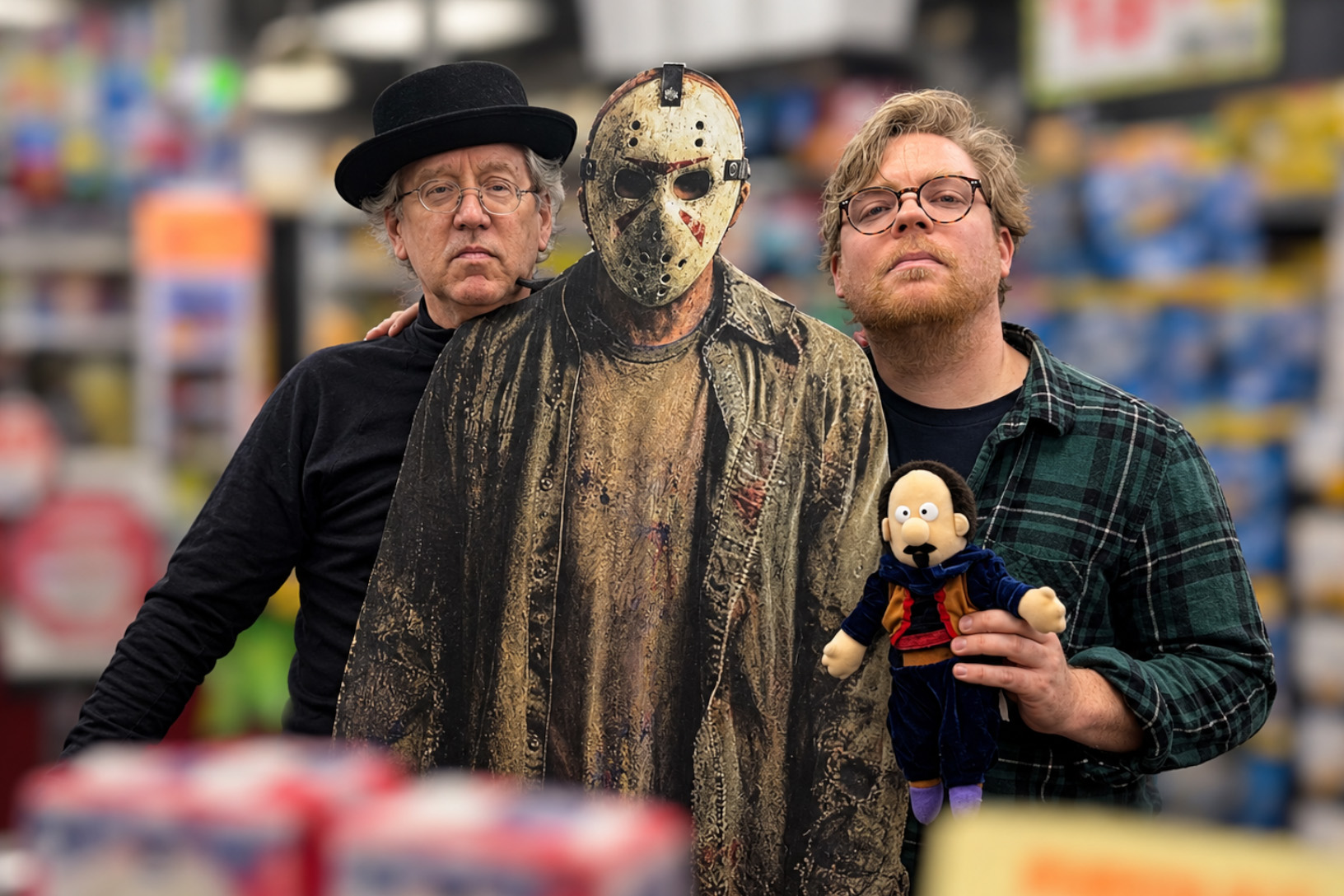
Long before Michael Myers stalked suburban streets and movie monsters filled theater screens, audiences were gathering to watch ghosts, witches, violence and revenge unfold on the English stage.
This spooky season, PennWest California alumnus Shawn Reese ’17 and Dr. M. G. Aune, professor of English, are looking several centuries into the past to explore just how deep horror’s roots run.
The pair co-authored a chapter in Horror on the Early Modern Stage: Nightmare on Thames Street, a new collection edited by Hannah Korell and Sheila Coursey that examines the elements of horror found in 16th- and 17th-century theatre.
“I think our idea of horror is really anchored in movies, monsters, murderers, ghosts, things that are essentially performances,” Aune said. “They give us opportunities to choose to be scared.”
The experience may not be as different from that of early theatergoers as modern audiences might guess.
“I think we tend to assume that people in the past were somehow less sophisticated and more superstitious and believed that witches were really lurking around the corner or a giant squid might attack a ship,” Aune said. “By reminding ourselves of this, we are able to keep some perspective. It's no more superstitious to believe witches actually exist than it is to go to a theater and watch a film of a witch.”
The book makes the case for extending the history of horror beyond the modern films and literature typically associated with the genre, examining how early modern plays used violence, the supernatural, psychological terror and other devices still recognizable to audiences today.
For Aune, whose teaching and research have long focused on Shakespeare, film and cultural studies, the project began with a call for papers from the Shakespeare Association of America on early modern horror. His proposal was accepted, and after presenting at the association’s conference, he was invited to expand his work into a chapter.
That was when he called Reese.
“I was not confident of my knowledge of horror, but Shawn had talked frequently about his love of horror movies,” Aune said. “Plus, I knew he was a talented writer, so I asked if he wanted to collaborate on writing the chapter, and he said yes.”
The resulting chapter brings together two seemingly distant genres.
“Mark pitched me the idea of writing about ’80s slashers and Early Modern revenge tragedies,” Reese said. “I knew slightly more about slashers and a lot lot less about drama, so I chiefly handled the slasher stuff.”
The two also became interested in the phenomenon of something being “so bad it’s good.”
Along the way, Aune gained a greater appreciation for the breadth of horror films and the scholarship surrounding them, including Pittsburgh’s significant ties to the genre.
The project also prompted the pair to consider why monsters continue to resonate, even as the monsters themselves change.
“On stage or in a film, fears are often converted into metaphors, often monsters,” Aune said. “I think we are at the end of a great cultural interest in zombies and vampires and moving into a time where we fear things that threaten or question the traditional family unit.”
For Reese, part of the appeal is discovering how much a centuries-old work can still connect with a modern audience.
“Is there anything more humanity-affirming than engaging with a 500-year-old work of art and finding that its shocks and gags still have power?” he said.
The collaboration grew out of Reese’s time as an English and Honors Program student at California, where he studied with Aune and was active in the English Department and Writing Center.
“I really enjoy learning and discovering new things and ideas, and those are the things that universities are really about,” Aune said. “What is even better is meeting students who share that curiosity and engagement. Shawn is one of those people.”
Reese credits those undergraduate experiences with helping shape the way he approaches writing and criticism today.
“I really cherish my time as an undergrad, and the work I was encouraged to do,” he said. “I studied with some incredible teachers who helped orient me toward very enriching avenues, including, of course, Mr. Aune.”
The two stayed in touch after Reese graduated, bonding over a shared interest in movies. Reese points to Row House Cinema’s Cult-O-Rama programming in Pittsburgh as one catalyst.
“It got us going to the movies together and talking all things cult, camp, and trash,” he said. “Once we started, there was no stopping it.”
Eventually, those conversations turned into scholarly collaboration – with one notable reversal of roles.
“It’s been a real joy,” Reese said. “Now I get to grade his work.”
Aune said working with a former student also changed what can otherwise be a solitary writing process.
“Writing can be a lonely task – putting words out onto a blank page where they just sit until an anonymous editor likes them or doesn’t like them,” he said. “Working with Shawn is much more enjoyable. We can read each other’s stuff and say, ‘that’s good, that makes sense.’ Or, ‘I have no idea what you are trying to say here.’ And we eat a lot of Thai food.”
For horror fans who have never considered looking to Shakespeare and his contemporaries for their next scare, Reese offers a simple reason to dig deeper.
“Everything has its roots in what came before,” he said. “The further back you dig, the more gold you’ll find. Everything is fruitful ground, and everything is fair game.”
And for anyone looking to add a 400-year-old selection to the Halloween lineup, Aune recommends Shakespeare’s Macbeth.
“It’s got everything,” he said, “ghosts, witches, apparitions.”
The chapter may not be the last project to emerge from Reese and Aune’s conversations about movies, literature and everything in between.
“We have plans for future collaborations,” Reese said. “The conversation’s only just started.”