California, Clarion, Edinboro, Global Online
PennWest professor helps reshape understanding of Arctic geological evolution
From Alaska to Siberia, years of fieldwork and collaboration are helping scientists better understand how the Arctic was formed.
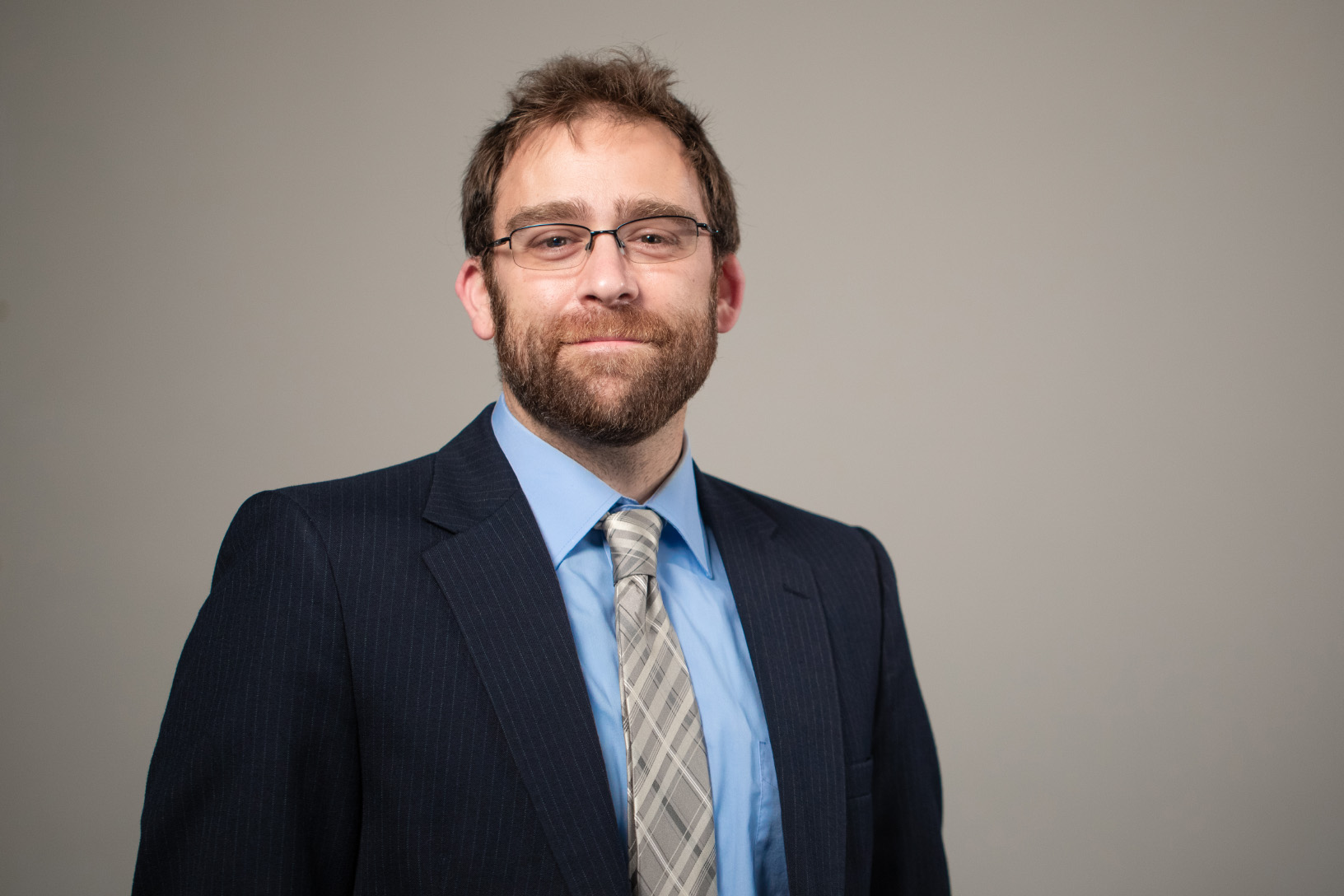
For Dr. Daniel Harris, revisiting old field notes meant reliving months spent mapping remote mountain ranges in Siberia and Alaska – complete with harsh weather, swarms of bugs and the occasional bear encounter.
Those experiences, combined with years of research and collaboration, helped produce a major scientific publication that offers a new explanation for part of the Arctic's complex geologic history.
Harris, a professor of geology in PennWest's Biology, Earth and Environmental Sciences Department, is a co-author of a new paper published in the Geological Society of America Bulletin introducing the "Beringia Arc," a newly proposed plate tectonic feature that helps explain the formation of volcanic and granitic rocks stretching from Alaska across the Bering Strait into Russia.
“This publication involves an enormous dataset compiled from multiple decades of researchers working on a tectonic reconstruction of Arctic basins,” Harris said. “There is not currently an agreed upon explanation for the plate tectonic story that describes how parts of the Arctic basins formed.”
The Beringia Arc offers a clearer explanation for how a belt of ancient volcanic activity developed across what is now Alaska and northeastern Russia. By combining the geographic distribution of rock formations with precise dating techniques, researchers can better reconstruct how tectonic plates moved between approximately 120 million and 70 million years ago.
“This newly proposed Beringia Arc provides a simple explanation for a complex problem and is now part of the understanding of how the Arctic developed by plate tectonic motion,” Harris said.
Harris' contribution to the project traces back to his doctoral research at West Virginia University, where he spent two field seasons collecting geological samples in northern Siberia and Alaska's Seward Peninsula. While portions of that work had previously been published, much of the data remained unpublished until he joined a collaborative effort led by researchers from New Mexico State University and West Virginia University.
“It was exciting to revisit the datasets and to update some interpretations with more modern advances during this project,” he said.
Harris reanalyzed rock samples, updated data tables, reviewed sections of the manuscript related to his expertise and collaborated with fellow researchers to strengthen the publication.
He credits lead author Jeff Amato and the other collaborators for compiling the enormous body of research into a single publication.
While Harris' research spans some of the world's most remote regions, its impact reaches PennWest classrooms every day.
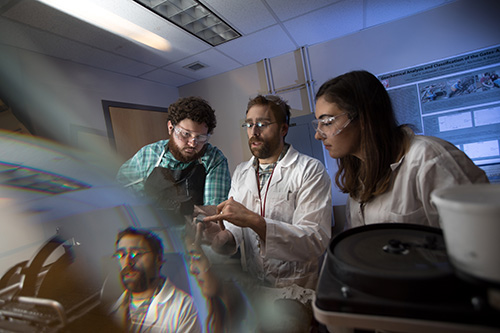 He regularly incorporates samples collected in Alaska and Russia into courses ranging
from mineralogy and petrology to geochemistry and introductory geology, giving students
firsthand exposure to real-world research.
He regularly incorporates samples collected in Alaska and Russia into courses ranging
from mineralogy and petrology to geochemistry and introductory geology, giving students
firsthand exposure to real-world research.
“I really like overlapping high-level research with instruction in my courses – both lecture and lab – and hope it provides a more compelling story for the students and a good example of how awesome science is,” Harris said.
Looking ahead, Harris hopes to involve more students in Arctic geology research, including investigating unusual rock samples that resurfaced during preparation of the paper.
“There is still a lot of cool work to be done, and I would always prefer to get students hands-on experience and publications on their resumes,” he said.
Although the Beringia Arc model represents an important advance, Harris emphasizes that scientists continue to debate how the Arctic evolved. He hopes the new research helps move that conversation forward while inspiring students to pursue their own scientific discoveries.
“One thing I love about geology and science in general is that we will never fully understand everything, but we can always understand a little more,” Harris said. “Overall, I hope that I can inspire passion for science in my students and have them understand how much cool stuff there still is to discover.”